

The Norwegian Armed Forces Medical Services in Transition
As of 1 January 2026, the Norwegian Armed Forces Medical Service (NAFMS) has been given a new organisational structure. In light of the security situation, both the medical profession and operational deliveries will be strengthened.
The Norwegian Armed Forces Medical Service (NAFMS, Norwegian name: Forsvarets sanitet) is entering 2026 with a new organisational structure.
Effective 1 January, NAFMS will adapt to the evolving security environment by strengthening its areas of professional authority, including associated advisory support to the Defence leadership, as well as its operational structures.
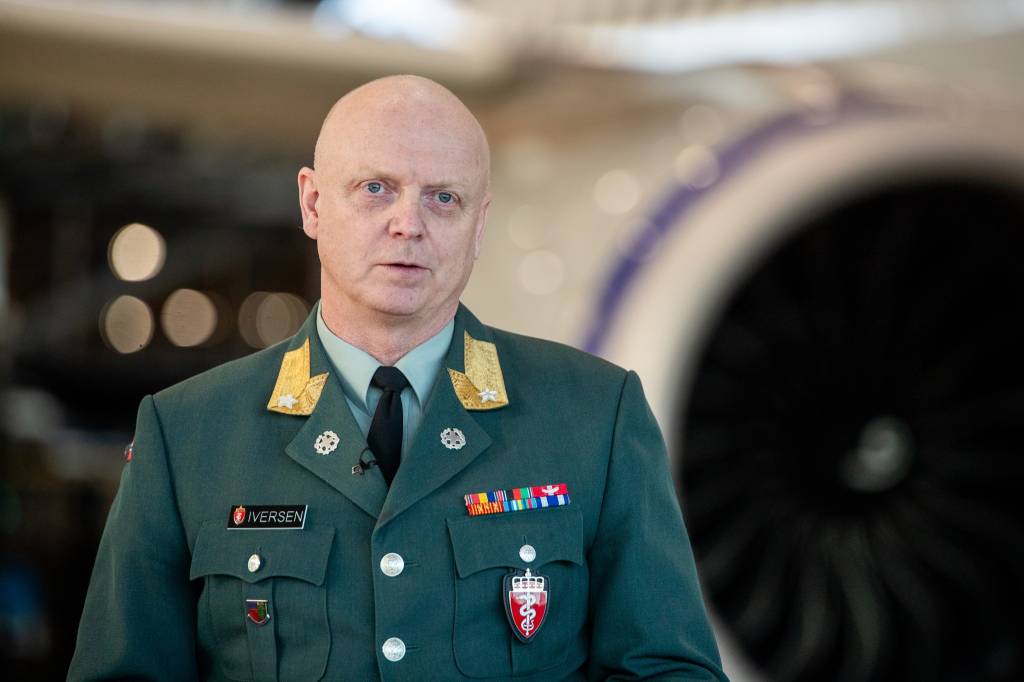
“In light of the current security situation, there is an increased need for medical support and civil-military cooperation to sustain military forces. Through this organisational development, we aim to achieve the greatest possible effect from the resources we have,” says Brigadier Petter Iversen, Commander of the NAFMS.
He explains that NAFMS has highly skilled personnel, but that no significant increase in resources can be expected, making it necessary to employ personnel in a more efficient way.
“The key measure to achieve this, is to establish a clear distinction between the exercise of professional authority and the provision of operational and clinical services,” says Iversen.
This will be accomplished by distributing responsibilities between a new institute and the Medical Regiment.
NAFMS Institute
The Armed Forces Medical Institute will serve as the center for NAFMS’s exercise of professional authority. A key focus area for the institute will also be research and development (R&D).
“In this way, we bring together the professional environments responsible for advisory support, the exercise of professional authority, and R&D. This will make it easier to achieve interdisciplinarity and better alignment of the various processes,” says Chief Medical Officer Colonel Bent-Åge Rolandsen.
The institute will consist of a leadership element and four main sections: Human Performance, Veterinary Services and Force Protection, Military Mental Health, and Military Medicine and Development.
“The institute will have limited operational output, which will allow us to prioritise professional advisory support and development.”
The Medical Regiment
The Medical Regiment will be strengthened by assuming responsibility for most of the clinical and operational outputs. The regiment currently includes field hospitals, medical evacuation and a veterinary group. It will now also receive the clinical services within dental health, stress management and the National Military Medical Outpatient Clinic.
“This enables us to provide more comprehensive medical support to the rest of the Armed Forces,” says Colonel Ronny Skeie, Commanding Officer of the Medical Regiment.
“With these new capabilities, the regiment now delivers critical contributions to the Norwegian Armed Forces’ operational capability every day, from peace to war. Over time, we aim to further strengthen the regiment with additional reservists who can be called up for duty.
“Expensive fighter aircraft, vessels and tanks are of little use if we do not take care of the health of those who operate them – both in terms of prevention and when they fall ill or are wounded. Medical support is therefore a vital part of sustaining the Armed Forces’ operational capability,” says Brigadier Petter Iversen.