

US turns to Norwegian AI to strengthen military cooperation in the Pacific
A Norwegian AI system caught the attention of US organisers at an exercise earlier this autumn. A few weeks later, the Norwegian Armed Forces team was invited to Hawaii to help the United States, Japan, and other partner nations share and make sense of military intelligence.
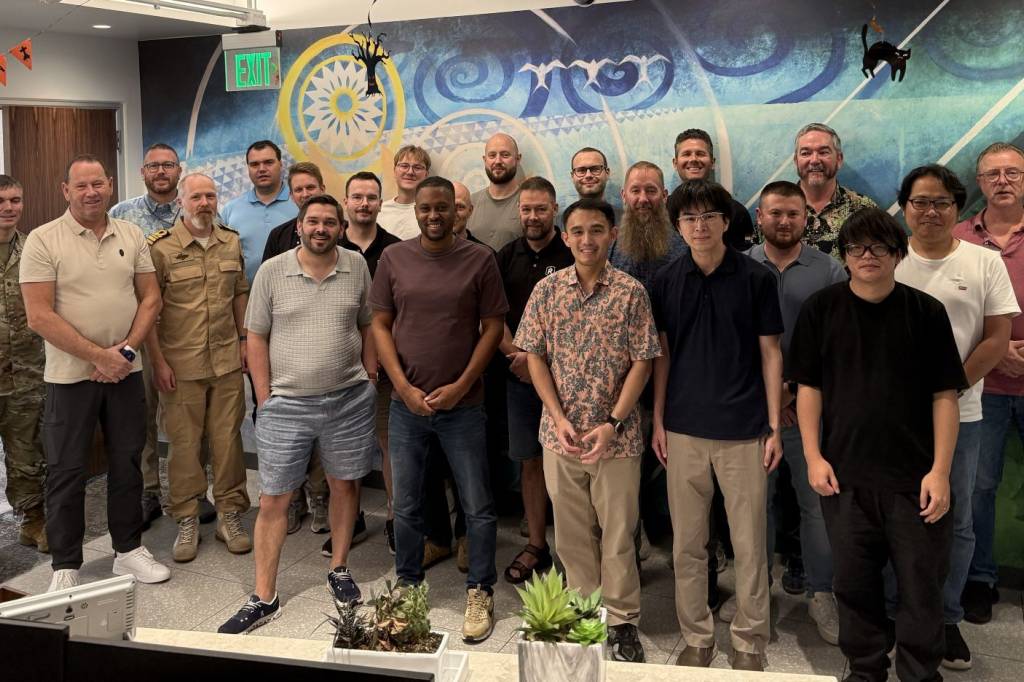
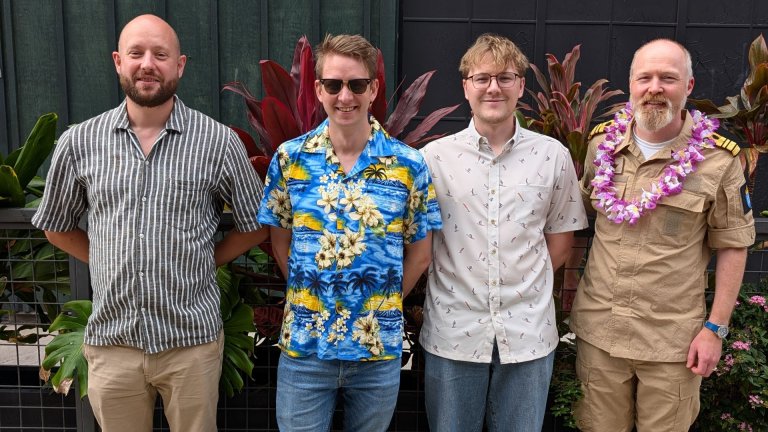
In October, a team from the Norwegian Cyber Defence and NOBLE at the Norwegian Joint Headquarters packed its computer equipment and headed to Hawaii for the PAX-SIX exercise.
PAX-SIX stands for Pacific Alliance Exchange for Security and Intelligence. It is a security initiative involving the United States, Japan and other partners in the strategically important Pacific region.
The Norwegian team’s initial task was to help participants translate between Japanese and English.
The US organisers had seen the Norwegian AI system in use at Bold Quest, a multinational exercise held in September, and wanted the team to bring it to PAX-SIX in Hawaii.
It worked from day one
The system combines language models, supporting tools, databases and user interfaces with dedicated hardware. This gave participants access to AI on closed networks.
“What made it unique was that we could pack it all into our hand luggage at short notice, take it halfway around the world, connect it to an unfamiliar network with no link back to Norway and have it working from day one,” says Christoffer Eriksen, project lead at Norwegian Battle Lab & Experimentation (NOBLE).
PAX-SIX brought together participants from the United States, Japan, NATO and the Five Eyes intelligence partnership. The aim was to improve the systems used to share intelligence and surveillance data.
Making intelligence usable across borders
When one country stores information in a database, another should be able to find and use it. That was the challenge participants worked on at PAX-SIX.
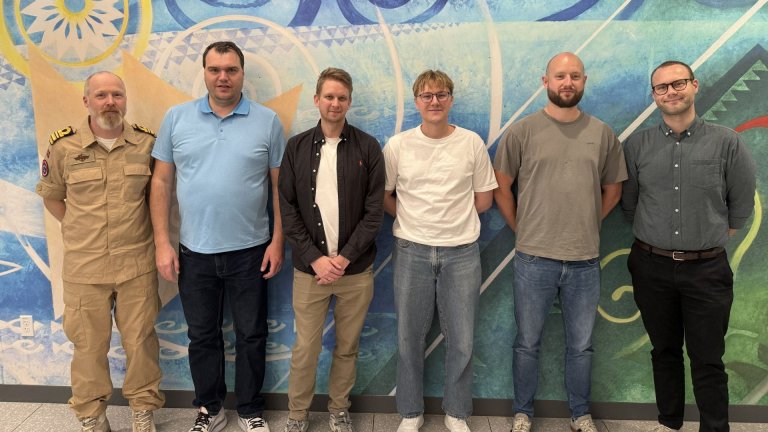
Norway sent two teams. One provided AI support to participants, while the other helped further develop a database for sharing intelligence, surveillance, and reconnaissance (ISR) data.
The exercise was led by the National Geospatial-Intelligence Agency (NGA), part of the US Department of Defense.
Dale Winchell of NGA’s Coalition Focus Team said in a statement that the Norwegian team’s dedication and technical expertise were instrumental to the success of PAX-SIX.
“Their work directly strengthens our collective ability to seamlessly share and retrieve critical intelligence assets, including imagery, exploitation reports, and Full Motion Video—across allied networks.”
From translation to troubleshooting
NOBLE at the Norwegian Joint Headquarters developed the AI system in collaboration with the Norwegian Cyber Defence’s IT department (CIT).
“Norway’s participation in PAX-SIX shows how close cooperation with allies and technical expertise strengthen our collective operational capability. I’m proud of the work our people from NOBLE and CIT put into this exercise. Their efforts improve information sharing, interoperability and our ability to operate seamlessly with our allies and partners in an increasingly complex security environment,” says Vice Admiral Rune Andersen, Chief of the Norwegian Joint Headquarters.
In Hawaii, participants used the tool to translate emails, chat messages and documents. It also helped them make sense of technical logs and error messages and summarise lengthy standards documents.
When developers needed to find out why systems were failing to exchange data, the language models could quickly compare the technical documentation for two databases and suggest changes that got them working together.
The system was also used to write code for a browser extension that could display web pages and applications in another language.
New ideas for use along the way
Håvard Høgstmyr of the Norwegian Cyber Defence’s IT department says the tool helped partner nations spend less time troubleshooting. Finland, the United States and Japan all gave positive feedback, he says.
“We made frequent changes based on feedback from users. Along the way, we also came up with ideas for uses we hadn’t considered before,” says Høgstmyr.
PAX-SIX at a glance
- Full name — Pacific Alliance Exchange for Security and Intelligence
- When and where — 2–13 November 2026, Honolulu, Hawaii
- Led by — National Geospatial-Intelligence Agency (NGA)
- Participants — The United States, Japan, NATO member countries and partners from the Five Eyes intelligence partnership
- Purpose — To further develop systems and standards that make it easier for countries to share and retrieve intelligence and surveillance data
- Norwegian contribution — Two teams from the Norwegian Armed Forces and Kongsberg Defence & Aerospace. One provided AI support and the other helped develop the ISR database.
- AI support team — Christoffer Eriksen (NOBLE, Norwegian Joint Headquarters), Marius Auerdahl (Norwegian Cyber Defence, CIT Platform Division) and Maximilian Andreas Rasmussen (Norwegian Cyber Defence, CIT DRIV).
- ISR team — Håvard Bjørnå Høgstmyr (Norwegian Cyber Defence, CIT DUO), Åsmund Sandland and Ingar Staver (both Kongsberg Defence & Aerospace).
Putting deployable AI to the test
In Hawaii, the Norwegian team tested how quickly it could get the system running on an unfamiliar network. The system worked without internet access or a connection to external AI services. The team can also draw on its experience in Hawaii as it continues to develop military AI systems in Norway.
“PAX-SIX gave us a chance to explore in depth how AI can help with communication, language and documents, and to see how far we could push a deployable AI capability. It feels good to help our allies while exploring technology we can put to operational use back home,” says Eriksen.
Andersen says PAX-SIX was a good example of how Norway and its close allies are working together to develop new ways to exchange information and build situational awareness.
“The results of this cooperation strengthen both cooperation within NATO and our ability to address shared security challenges. The Norwegian team showed a high level of expertise, a strong commitment and an ability to turn technical expertise into practical operational value for the Alliance,” says Andersen.
