



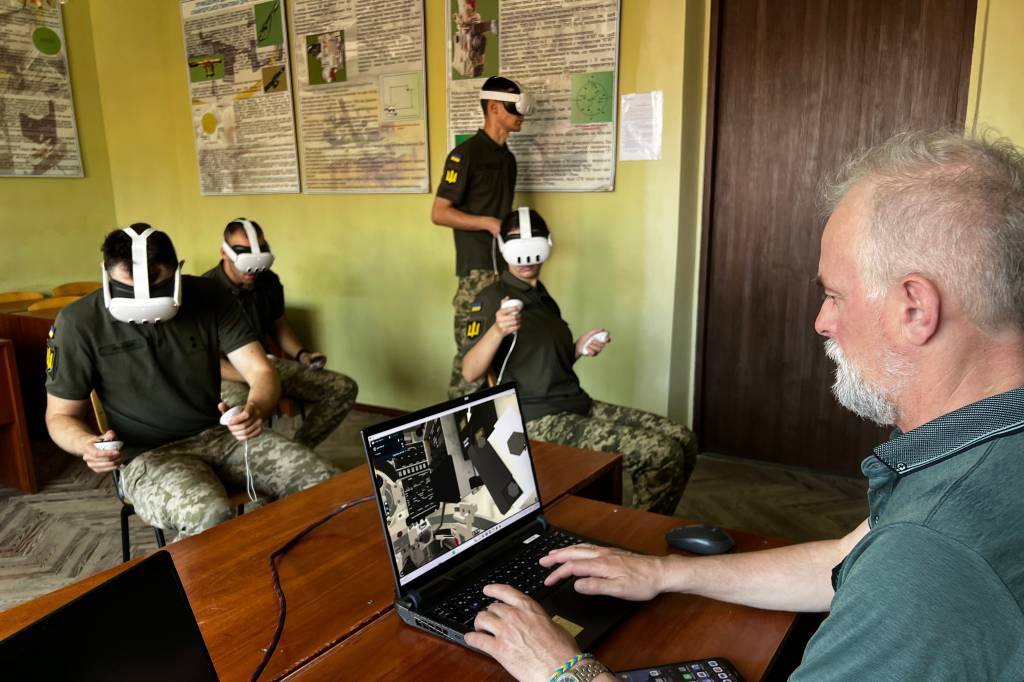
How VR helped train Ukrainian cadets
What began as a series of experimental pilots has evolved into operational training programmes used in Norway, Finland and Ukraine.
For six years, the XR (Extended Reality) programme at the Staff College, part of the Norwegian Defence University College, has explored how virtual reality (VR) and artificial intelligence (AI) can strengthen military education.
While the VR element is now being phased out, research on AI-powered learning continues.

Technology must serve learning
The programme has never been driven by technology for its own sake. Instead, researchers have explored how immersive technologies can help military students better understand complex challenges such as hybrid warfare, civil wars and threat assessments.
"Research has shown that VR is particularly effective for teaching what we call 'troublesome knowledge', topics that challenge existing assumptions and are often difficult to communicate through lectures alone," says Stian Kjeksrud, Professor and Head of the XR Programme.
The projects were designed to complement, rather than replace, traditional teaching through seminars, reflection, red-teaming and discussion. Researchers found that virtual presence and active participation increased motivation and engagement, especially when combined with sound pedagogy.
Supporting Ukraine's military education

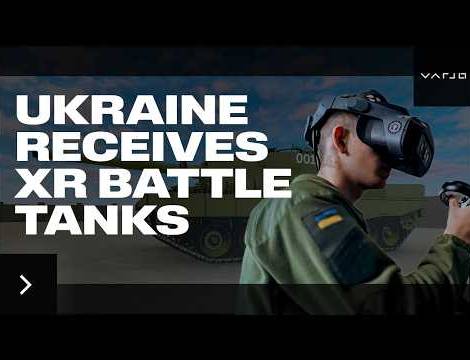
The programme's most visible achievement has been the development of a virtual Leopard 2A4 tank for training Ukrainian soldiers. Developed in partnership with industry, military subject-matter experts and Ukrainian stakeholders, the platform enables cadets to practise procedures, teamwork and vehicle operation without access to physical equipment.
"Ukrainian cadets can now train procedures, teamwork and tank operations without access to the actual platform," says project manager Terje Skjølsvik.
Since it entered operational use in Ukraine in 2024, the programme has expanded to additional military units and weapon systems. Ukrainian instructors report that even cadets with no prior tank experience quickly master basic procedures after VR training. Exam results have improved significantly, and student motivation remains high.
In 2026, the Norwegian government allocated NOK 82.5 million to develop the technology and pedagogy further, together with Ukrainian partners. Ukraine has expressed a desire to continue expanding this approach beyond 2026, and in September this year, the project received a Ukrainian medal in recognition of its contribution.
Learning about hybrid threats through AI
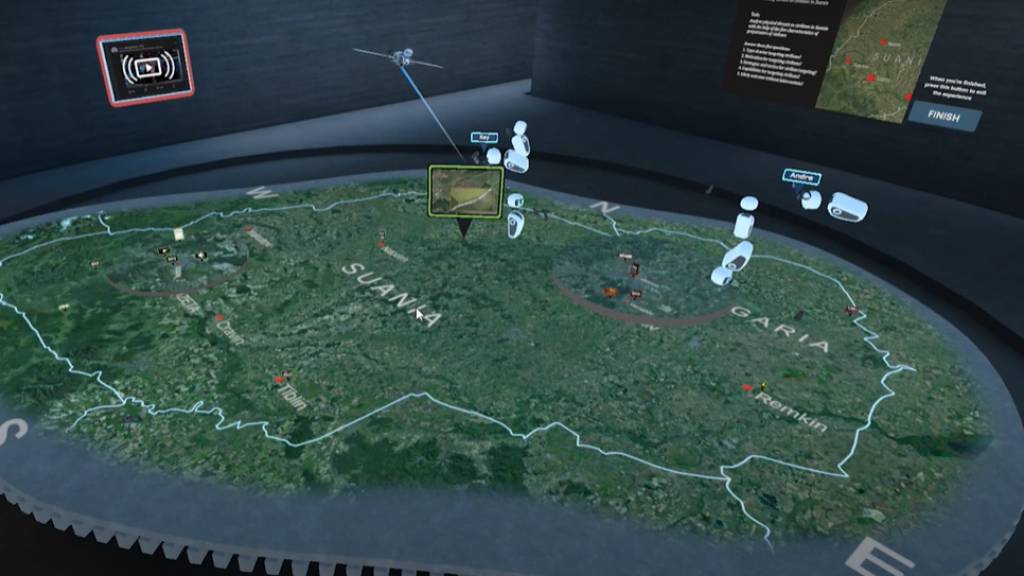
Another project combined VR and AI to teach students about hybrid threats. In a virtual map environment, students engage in dialogue with an AI-powered avatar while analysing realistic scenarios involving influence operations, organised crime, economic warfareand other forms of hybrid threats.
The research revealed strong student engagement, but it also reinforced a key lesson: technology alone does not create learning.
"The best outcomes occur when AI and VR are integrated into problem-based learning, reflection and collaborative activities," says Kjeksrud.
Lessons for defence education

Across all three projects, several conclusions stand out. Effective learning depends on pedagogy, not technology alone. VR is particularly valuable for understanding complex and ambiguous challenges rather than simply practising technical skills. The collaboration with Ukraine has also demonstrated how education and professional development remain critical, even during a high-intensity war.
"The most important achievement may be that we conducted systematic, research-based work combining technology development, pedagogical innovation and testing in real education," says Stian Kjeksrud. "Our students have been our most important co-developers."
According to Petter HF Lindqvist, who led the development of two VR-programmes now uses them to teach senior representatives from NATO and the UN, immersive learning can also strengthen critical thinking and help leaders recognise their own biases.

What's next?
While the VR programme is coming to an end, the research team is now focusing on large language models as learning partners for military students. Early findings suggest that human-AI collaboration, sometimes referred to as "hybrid intelligence", can improve learning, research and problem-solving outcomes.
"The future is not about replacing military didactics with AI," says Silje Alette Engdal, PhD candidate at the Norwegian Defence University College and the University of Oslo. "It is about exploring how people and artificial intelligence can learn and solve problems together more effectively than either could alone."
Partners in the programme
Do you want to learn more?
-
Scandinavian Journal of Military Studies Making Hybrid War Teachable and Learnable: Combining Artificial Intelligence and Virtual Reality in Military Education

This article explores how the combination of artificial intelligence (AI) and virtual reality (VR) within a single learning design may support military master’s students understanding of hybrid war. Drawing on threshold concepts, adult learning theory, immersive VR learning, and AI literacy, it examines a prototype application integrating a language model with a map-based virtual environment.
The Visual Computer Military education in extended reality (XR): learning troublesome knowledge through immersive experiential application

Extended reality (XR) applications for education are usually associated with motivation, engagement, knowledge and experiences that are difficult to achieve in the real world. One example of such knowledge in military education is the threat-based approach to protection of civilians in armed conflicts.
-
Varjo og Fynd Reality Delivering advanced mixed reality solutions to Ukraine


You have to accept cookies from YouTube to be able to see the content
Together with Fynd Reality, Varjo delivered 39 XR systems to Ukraine under the Norwegian Nansen Program, enabling multi-user Leopard 2A4 crew training without access to a single physical vehicle.