

Command team FSANs liste
Dette er en side med artikler, podkast-episoder, videoer og bøker som sjef og sjefssersjant for Forsvarets sanitet anbefaler for faglig oppdatering.
Sjefen og sjefssersjanten vil gjerne ha tips til nye ting som bør deles. Dette kan sendes fsan.info@mil.no. Tipsene gjennomgås av en redaksjonskomité ledet av Command teamet og siden oppdateres hver måned.
FSAN understreker at denne siden kun er ment for kompetanseheving. Den representerer ikke føringer, råd og anbefalinger for sanitetsvirksomheten i Forsvaret.
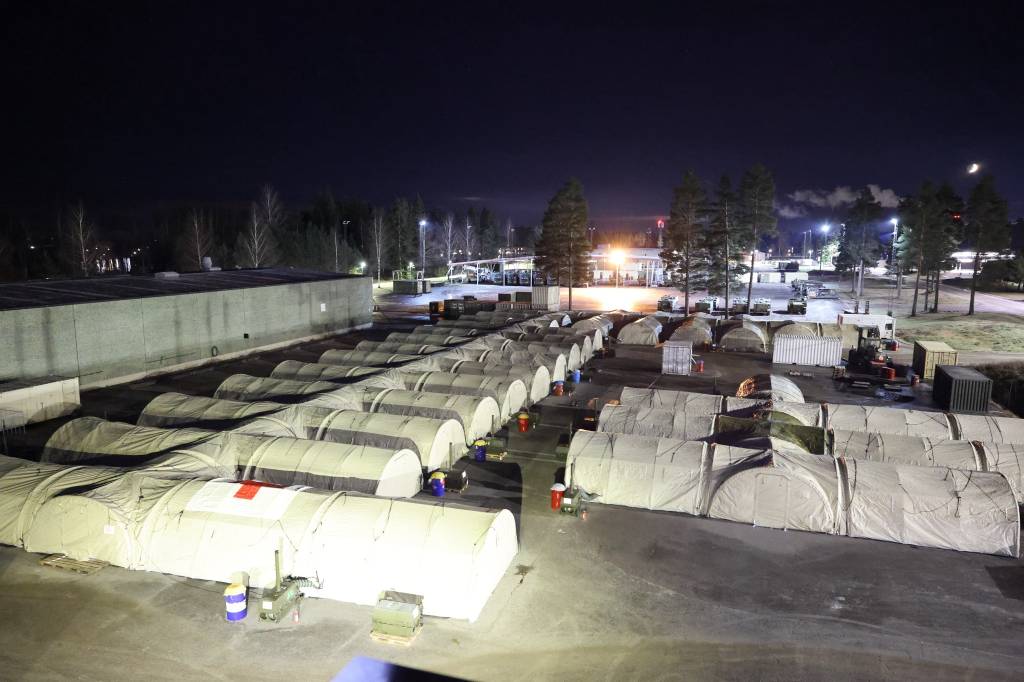
Toppbilde for desember: For første gang siden 2019 har Sanitetsregimentet i Forsvarets sanitet satt opp og trent med et Role 2 Enhanced feltsykehus på øvelse. Øvelsen markerer et viktig steg i utviklingen av sanitetens evne til å håndtere større pasientvolum i en ny sikkerhetspolitisk situasjon. Foto: Håkon Haugen/Forsvaret
Det har vært noen travle måneder. Støtte til Ukraina og egne forberedelser av vårt hjemlige forsvar til å bli klar til strid i nær fremtid med adekvat helsehjelp til de som skal kjempe kampen har hatt fokus og leselista har måttet blir nedprioritert.
Nå nærmer det seg jul og vi håper at alle dere med hjerte for sanitet får mulighet til å slappe litt av. Kanskje dere også får overskudd og tid til en faglig oppdatering.
Juleutgaven har noen nye artikler, samt noen vi har publisert tidligere som vi mener tåler og leses på nytt. Temaene vi mener er viktig er forståelse om biologisk krigføring, ny bioteknologi og potensielle trusler. Mental beredskap i krise og krig er undervurdert. FSAN ønsker å fokusere på fremtidige behov rundt forebygging og behandling av helseutfordringer i krig, forebygging er mer økonomisk for kampkraft enn behandling. Storskala kampoperasjoner og medisinsk understøttelse av disse vil være en tema som kommer til å ha oppmerksomhet i denne og fremtidige leselister.
Det er av ytterste nødvendighet at vi forstår nødvendigheten av å endre fra hvordan vi drev sanitetsoperasjoner i opprørsbekjempelse til hvordan vi skal medisinsk understøtte i fullskala krig mot en jevnbyrdig motstander. Mangel på kompetanse rundt denne endringen og tilsvarende vilje til å gjøre noe med det vil koste liv og helse for våre soldater. Vi har alle et ansvar for å utvikle tjenestene våre i tråd med faglige anbefalinger.
God lesning og god jul!
Hilsen
Petter Iversen og Cato Pettersen
Sjef og sjefssersjant Forsvarets sanitet
Tema: Biologisk krigføring og fremtidige utfordringer
📰Smallpox at the Siege of Boston,
November 1775–March 1776
D.S. Jones, et.al. Smallpox at the Siege of Boston, November 1775–March 1776. N Engl J Med. Published December 6, 2025
George Washington was worried. On December 3, 1775, nearly 8 months into the siege of Boston, he received intelligence from four British deserters about an “unheard-of and diabolical scheme”: “several persons are to be sent out of Boston, this evening or to-morrow, that have been lately inoculated with the small-pox, with design, probably, to spread the infection, in order to distress us as much as possible.”
📄Future Bioterror and Biowarfare Threats for
NATO’s Armed Forces until 2030
Juling, D. Future Bioterror and Biowarfare Threats for NATO’s Armed Forces until 2030. J. Adv. Mil. Stud. 14, 118–143 (2023).
The article argues that advances in biotechnology and other transformations of the threat environment will increase the risk for North Atlantic Treaty Organization (NATO) forces of being confronted with a biological, particularly a genetically modified, weapon by 2030.
📰This Is the 21st-Century Arms Race.
Can America Keep Up?
NY Times, 2025.
Innovations in A.I., synthetic biology and quantum computing Are to change war.
Tema: Utfordringer med mental helse og krig
📄U.S. Army psychiatric and behavioral health
challenges in future LSCO: A narrative review
Wilkes, S. L., Wolfe, C. L., Novosel-Lingat, J. E. M., Pitts, W. B., & Sullivan, R. M. (2025). U.S. Army psychiatric and behavioral health challenges in future LSCO: A narrative review. Military Psychology, 1–13.
«Future large-scale combat operations (LSCO) against near-peer adversaries may unfold in a fluid, multi-domain battlespace where precision fires, drone swarms, and contested evacuation erase rear-area sanctuaries.»
💻Nye manualer for Operativ Resilienstrening
Forsvarets sanitet. Operativ resilienstrening. 2025
Forsvarets sanitet (FSAN) har lansert oppdaterte manualer for Operativ resilienstrening (ORT) på norsk, engelsk og ukrainsk. Manualene skal styrke robusthet og mestringsevne i krevende situasjoner for Forsvarets personell og samarbeidspartnere.
Tema: Storskala kampoperasjoner og medisinsk understøttelse
📄The «Survival chain»
Jennifer M. Gurney et.al. The “Survival Chain”. Ndupress 2024
Medical Support to Military Operations on the Future Battlefield.
📄Providing for the Casualties of War
- The American Experience Through World War II
Bernard D. Rostker. Providing for the Casualties of War. RAND
«As a follow-up to Providing for the Casualties of War: The American Experience Through World War II, this volume continues the history of military medicine and how it has evolved during U.S. conflicts since World War II. As battlefield tactics and weaponry have changed, so has casualty care, from the battlefield to more definitive care to rehabilitation. The use of advanced technologies, such as hemostatic agents; new ways to use old procedures, such as tourniquets; and rapid evacuation have increased survival to unprecedented rates. However, as this book describes, there is a greater need not only for rehabilitation but for disability programs, so the interaction between the military medical services and the VA has taken on greater importance.»
📰 European Medical Provision in Times of War
Ed Arnold and Si Horne. European Medical Provision in Times of War. RUSI October 2025
«As European militaries ready themselves for war, creating resilient medical systems remains an afterthought for the UK.
Russia’s 2022 invasion of Ukraine has driven the largest transformation of NATO’s military strategy since the Cold War with a new ‘family of plans’, under the Supreme Allied Commander Europe’s command, sharpening NATO’s Russia-facing spear.
But the Alliance’s medical provision needs to catch up urgently. If war breaks out, Russia will attack allied health systems – just as it is attacking Ukraine’s – as a deliberate strategy to weaken our will and capacity to fight. Multi-dimensional attacks on the NHS would overload Cabinet decision-making, diverting political attention away from the wider threat. Blatant Russian denial, deflection and disinformation has rendered international law ineffective at protecting healthcare. For those services to continue to function effectively in war, increasing resilience must be a priority.»
📄Resiliency of the Ontario health care system
to care for casualties due to conflict with a
near-peer adversary:
A population-based modeling study
Gomez, David et.al. Resiliency of the Ontario health care system to care for casualties due to conflict with a near-peer adversary: A population-based modeling study. The Journal of Trauma and Acute Care Surgery. Published online: April 24, 2025.
Given that Ontario hospitals (ICU, burn, ward, and rehabilitation) typically run close to or exceed their funded capacity, care for casualties repatriated from large scale combat operations will require new resources and innovative strategies to manage patient flow.
📄Qualitative assessment of combat-related
injury patterns and injury prevention in
Ukraine since the Russian invasion
Lawry LL, Mani V, Hamm T, et alQualitative assessment of combat-related injury patterns and injury prevention in Ukraine since the Russian invasionBMJ Mil Health Published Online First: 04 February 2025.
«Introduction The ongoing invasion of Ukraine by the Russian Federation represents one of the largest ongoing conventional military engagements in the last 20 years. Since the start of the war, an estimated 210 000 Ukrainian soldiers have been injured or killed as a result of combat. This experience could help prognosticate the nature of large-scale combat operations for modern militaries. The aim of this study was to assess current patterns of injuries among military combatants in Ukraine and identify prevention and mitigation methods.
Conclusion The current conflict in Ukraine is characterised by a high prevalence of devastating combat-related injury, with limited measures for battlefield injury prevention. We believe that the provision of additional protective gear could mitigate the severity of some combat-related injuries, while the creation of a trauma registry would provide greater insight into prevention, wounding patterns, treatment and outcomes.»
Historie
Tre desperate uker

Faktabøker - Militær sanitet
War Surgery in Afghanistan and Iraq

Håndbok i militærpsykiatri — Jon Gerhard Reichelt
Militær sanitetshistorie
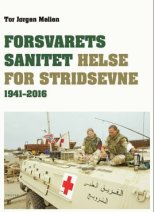
FORSVARETS SANITET - HELSE FOR STRIDSEVNE 1941-2016 — Tor Jørgen Melien
Nettsider
Uptodate (gratis for Forsvaret) Oppslagsverk. Anbefaler å laste ned appen.
Podkaster
Ukrainapodden (Nettavisen)
Ukraina the latest (The Telegraph)
Det store bilde (Eirik Bergersen og Sofie Høgestøl)
Krigens krav (Heimevernssamfunnet)
Forsvarspodden (Forsvaret)
FRAMSnakk (Helse Midt RHF)
Tidligere utgaver
-
📄Artikkel:Clues to survival in future LSCOs are to be found in the current war in Ukraine
The war in Ukraine is a real-time humanitarian tragedy in the center of Europe, with military and civilian casualty numbers not seen since World War II. This war is a real-world template for future large-scale combat operations (LSCOs). It reiterates previous combat casualty care lessons and introduces new challenges needing urgent resolution.
📄Artikkel: Resiliency of the Ontario health care
system to care for casualties due to conflict with
a near-peer adversary: A population-based modeling study
The threat of conflict between near-peer adversaries provides unique challenges to any health care system. As evidenced by the Ukraine-Russia conflict, sustained combat across broad geographic areas has led to a large number of casualties. Furthermore, the utilization of thermobaric and incendiary weapons has been associated with high proportions of combined multisystem blunt, penetrating, thermal, and blast injuries. The management of large volume of casualties with complex injuries will require significant resources. Military and civilian health care systems that may face a sustained and large evacuation of casualties to the homeland for definitive and rehabilitative care must plan accordingly.
📄Artikkel: Medicine in the drone age:
prehospital emergency care under the threat of enemy UAS
The Ukraine–Russia conflict has seen unprecedented use of uncrewed aircraft system (UAS), leading to significant changes in injury patterns and medical evacuation constraints. This article examines the mechanisms of injury caused by UAS, the epidemiology of these injuries and the challenges faced by medical teams in evacuating and treating casualties. The prevalence of UAS has resulted in a higher incidence of head, neck and acoustic injuries, necessitating minimally invasive surgeries and advanced imaging techniques. The ability of Russian forces to sustain long-range UAS operations has severely restricted casualty movement and increased the risk to medical providers. This article highlights the need for enhanced force protection measures, including the use of counter-UAS technology, improved personal protective equipment and innovative evacuation strategies such as uncrewed ground vehicles. The findings underscore the importance of adapting medical practices to the evolving threat landscape and ensuring the safety and effectiveness of medical teams operating in high-risk environments.
📄Artikkel: A Call for Comprehensive Reform of Military
Medical Planning of NATO and Its Allies Based on Lessons
From the Ukraine War-Cultural Context and the Human
Factor
(Betaling)
📄🎥Artikkel og video: Hvordan er Norges helseberedskap
rustet i en eventuell krig?
Bakgrunnen for NSFs arrangement under Arendalsuka er alvorlig: USA har lagt om kursen, Russland driver offensiv krigføring i Ukraina, EU ruster opp, og NATOs fremtid er usikker.
🎥Video: Helseberedskap for fremtiden –
Hvordan forbereder vi oss på det uforutsette?
Samfunnet står overfor stadig nye utfordringer – fra pandemier og klimaendringer til krig og teknologiske omveltninger. I tillegg er verden mer ustabil og uforutsigbar enn på lenge. For å sikre en fremtidig robust helsetjeneste, må vi ikke bare styrke tjenestene og gjøre dem mer fleksible, men også utdanne leger som både er kompetente og tilpasningsdyktige. Er dagens videre- og etterutdanning for allmennleger (ALIS) og samfunnsmedisinere (SamLIS) tilpasset dette? Og hvordan kan vi sikre at helsetjenesten står støtt når kriser rammer? Dette arrangementet utforsker hvordan vi best kan forberede helsetjenester og leger på det uforutsette
-
📄Artikkel: Combat Medicine: A New Era in Ukraine
- Russia’s war in Ukraine is not only transforming the battlefield, it is also rewriting the rules of battlefield medicine.
- CEPA
🎙️Podkast: Gen. Donahue on Deterring Russia in Europe
- Gen. Christopher Todd Donahue, who leads U.S. Army Europe and Africa as well as Allied Land Command, joined Ryan for a discussion at WOTR HQ. For the first five minutes, they chat about his Army story, his time in the Ranger Regiment, before discussing how the Army Transformation Initiative is unfolding in Europe, from maneuver brigades, new technologies, command-and-control, drone and counter-drone operations, and more. Donahue previews how the U.S. Army has deliberately identified lessons from the war in Ukraine and how the Army fits into the joint fight.
- War on the Rocks
📄Artikkel: Øving av helseberedskapen i NATO
- I mai deltok sivile og militære aktører i en stor multinasjonal øvelse innen helseberedskap. For første gang hadde Norge deltakelse samtidig både i Tyskland og hos Helsedirektoratet i Norge.
- I artikkelen er det informasjon om erfaringer fra øvelsen.
- forsvaret.no
📄Artikkel: From application to conversion:
The development of a tourniquet reassessment algorithm
for nonmedical military personnel by a North Atlantic
Treaty Organization specialist team
- Koch, Eric J. DO; Russo, Rachel M. MD; Medby, Christian MD; Dorlac, Warren C. MD; Holcomb, John B. MD; Gurney, Jennifer M. MD; Polk, Travis M. MD; Ricks, Jeffrey C. MD
- Journal of Trauma and Acute Care Surgery
- Det er ikke fri tilgang til denne - Send epost til cmedby@mil.no for å få tilsendt artikkelen.
-
📰Preparation of battle casualties for surgery
-
Henry Beecher
-
Annals of Surgery, 1945
-
Beecher gir et unikt innblikk i den imponerende kompetansen og erfaringen som militære kirurger hadde tilegnet seg etter 2. verdenskrig. Særlig imponerende er det å lese betraktninger omkring resuscitering med blod og krystalloider. Dette er kunnskap som dessverre gikk i glemmeboken og ikke ble erkjent igjen før rundt 2010. Artikkelen anbefales for alle med interesse for kirurgi, resuscitering/anestesi og/eller sanitetshistorie.
📰The Evolution of Military Medicine in History
-
Total Military Insight, 2024
-
Military medicine has undergone significant transformation throughout history, shaped by the demands of warfare and the need for effective care. Initially, medical practices were rudimentary, often limited to traditional herbal remedies and basic wound treatment by soldiers themselves or dedicated medics. The nature of conflicts necessitated advancements in the understanding of anatomy and injury management.
-
Lockertsen, et.al.
-
UIT og The Univerity of Huddersfield (UK)
-
Abstract: During the Korean War (1950-1953) the Norwegian government sent a mobile army surgical hospital (MASH) to support the efforts of the United Nations (UN) Army. From the first, its status was ambiguous. The US-led military medical services believed that the “Norwegian Mobile Army Surgical Hospital” (NORMASH) was no different from any other MASH; but both its originators and its staff regarded it as a vehicle for humanitarian aid. Members of the hospital soon recognised that their status in the war-zone was primarily that of a military field hospital. Yet they insisted on providing essential medical care to the local civilian population as well as trauma-care to UN soldiers and prisoners of war. The ambiguities that arose from the dual mission of NORMASH are explored in this paper, which pays particular attention to the experiences of nurses, as expressed in three types of source: their contemporary letters to their Matron-in-Chief; a report written by one nurse shortly after the war; and a series of oral history interviews conducted approximately sixty years later. The paper concludes that the nurses of NORMASH experienced no real role-conflict. They viewed it as natural that they should offer their services to both military and civilian casualties according to need, and they experienced a sense of satisfaction from their work with both types of patient. Ultimately, the experience of Norwegian nurses in Korea illustrates the powerful sense of personal agency that could be experienced by nurses in forward field hospitals, where political decision-making did not impinge too forcefully on their clinical and ethical judgment.
📕Forsvarets sanitet - Helse for stridsevne 1941-2016
-
Tor Jørgen Melien
-
Forsvarets sanitet - Helse for stridsevne 1941–2016. 517 s, ill. Oslo: Dreyers forlag, 2016. ISBN 978-82-8265-175-2
-
Fra Rune Rimstad sin anmeldelse: "Denne historiske fremstillingen av Forsvarets sanitet ble gitt ut i forbindelse med 75-årsjubileet i 2016. Den følger også den øvrige saniteten i Forsvaret, den sivile helsetjenesten og det vekslende samspillet mellom disse. Forfatteren er historiker og offiser." "Boken gir verdifull innsikt i den historiske bakgrunnen for dagens sanitetstjeneste og totalforsvarskonseptet, der den militære og den sivile helsetjenesten må fungere sammen som én enhet i krise og krig. Den kan bidra til å skape en forståelse som gir bedre samarbeid og synliggjøre at militær sanitet ikke er noe som kun er relevant for Forsvaret."
-
-
Lettlest
-
Euromaidan press
-
Behind Ukraine’s front lines, a 500-strong volunteer medical force discovers what happens when their ambulances become top targets for cutting-edge war tech, forcing them to create rules Western armies rush to adopt.
-
Forsvarets sanitet
-
Norge et av de første landene som har utviklet et kurs som er både praktisk og konkret i å hjelpe soldater å håndtere stress og psykisk påkjenning. Erfaringene er blant annet hentet fra Ukraina.
-
Lt. Gen. Mary Krueger Izaguirre, et.al.
-
Military Review
-
As the U.S. Army considers near-peer threats associated with multidomain operations (MDO) and large-scale combat operations (LSCO), it must assess medical implications on overall combat effectiveness and mission success. Estimates for LSCO suggest casualty rates the likes not seen since World War II, requiring the joint force and the Military Health System to reimagine triage, combat casualty care, medical evacuation, force health protection (FHP), and prolonged casualty care to minimize the risk to force.
Dybde sanitet
📰Artikkel: The SHADER model: forward surgical teams managing high-intensity, low-frequency military surgery incidents-
David N. Naumann, et.al.
-
BMJ Military Health
-
Ikke fri tilgang.
-
Daniel J. Hurst
-
Military Medicine
-
Military reverse triage has been described at several points in the literature. However, an extensive review of the concept and any gaps that may exist has not been conducted. This narrative review seeks to understand how reverse triage is used in the military literature and how it might be implemented in practice, as well as the documented historical applications of reverse triage.
📰Artikkel: A qualitative assessment of disease and non-battle injuries in Ukraine since the Russian invasion-
Amandari Kanagaratnam, et.al.
-
Conflict and Health
-
Disease and non-battle injuries (DNBI) often account for more military casualties than those from combat wounds. The February 2022 Russian invasion of Ukraine has severely limited access to care in areas with increasing patient care needs beyond combat injuries. The expansion of the draft resulted in an older military population susceptible to musculoskeletal injuries, while trench warfare and harsh winters create conditions conducive to cold weather injuries and infectious diseases. This study aims to assess the prevalence and scope of DNBI in Ukraine. Methods
-
Dennis G. Barten, et.al.
-
Prehospital and Disaster Medicine
-
Attacks on health care – which are potential war crimes – are increasingly observed in contemporary armed conflicts. The full-scale Russian invasion of Ukraine is no exception to this worrisome trend. War crime prosecutions of suspected deliberate attacks on health care facilities require proof that they were the intended target, which is extremely challenging. If health care facilities are attacked more than once, this may increase the likelihood of intent. The Ukrainian Healthcare Center (UHC) began documenting attacks on health infrastructure since the start of the full-scale Russian invasion of Ukraine. In this study, the aim was to assess repetitive attacks on Ukrainian health care facilities from February 24, 2022 through October 24, 2023.
Militærfaglig generelt
📰Artikkel: Tactical Developments During the Third Year of the Russo–Ukrainian War
-
Dr Jack Watling and Nick Reynolds
-
RUSI
-
This paper outlines tactical developments by Russian and Ukrainian forces during 2024 and highlights areas where military–technical assistance to Ukraine can be improved.
-
-
LETTHØRT/LETTLEST/LETTSETT
📹Video: Arktis - Iskald frontlinje
- NRK TV
- Gir en god overordnet situasjonsforståelse for situasjonen i nord-områdene.
📹Video: Frokostmøte om samarbeid
mellom Forsvaret og helsetjenesten i kriser og krig- Den Norske Legeforening
- På siden er det både kort intervju med innledere
til møte og link til Facebook opptak fra hele møte.📹Video: Underground Role 2E (LinkedIn)
- Roman Kuziv, Commander, MFSG East, Armed Forces of Ukraine
- Underground Role 2E 10-12 km from the contact line time
of evacuation (25 minutes - 6 hours). One of our most effective
evacuation schemes POI - CCP/XP - Role2E - Role4.
The work is prioritized for the seriously wounded, if necessary,
such specific specialists as: thoracic, vascular or neurosurgeons
are involved.
🎙️Podkast: Medevac
- WHO: Health in Europe
- Crisis and conflict dominate the headlines. The ongoing war in Ukraine and the conflict between Israel and the occupied Palestinian territory have brought death, destruction and displacement. But among the major disasters and conflicts. It's important to look for the stories of the people who are helping. As we mark over 5,000 medical evacuations from Ukraine, in this episode of Health in Europe, we'll share stories about some of the sick and injured people who have been transported away from war zones and other emergencies, and of their welcome, medical treatment, recovery and eventual repatriation. We'll also explore the Region's Emergency Medical Teams to learn about people who, with sometimes only hours notice, drop everything to travel to emergency zones. Who are they and what motivates them?
📰Artikkel: Fighting the war in Ukraine on the electromagnetic spectrum
- The Economist
- Drone operators and jammers are in a high-tech arms race
DYBDE PÅ SANITET GENERELT
📰Artikkel: The “Survival Chain” Medical Support to Military
Operations on the Future Battlefield- JFQ
- Col. Gurney, et.al.
📰Artikkel: Guerilla Casualty Care Nodes and Web Networks on
the Future Battlefield- Military Review
- Col. Brown, et.al.
- Health service support for the combat wounded must adapt to changing conditions on the battlefield. While the last twenty years of combat have focused on counterinsurgency operations, future conflicts will likely feature large-scale combat operations (LSCO), with concurrent guerilla and irregular warfare shaping and kinetic operations. The National Security Strategyoutlines that the world is reaching an “inflection point” in which major powers will compete to shape the international order. Underpinning this new era of global campaigning is the continuing threat of conflict with peer and near-peer adversaries.
- The Journal of trauma ans Acute CARE Surgery
- Remondelli, et.al.
- The last 20 years of sustained combat operations during the Global War on Terror generated significant advancements in combat casualty care. Improvements in point-of-injury care, en route care, and forward surgical care appropriately aligned with the survival, evacuation, and return to duty needs of the small-scale unconventional conflict. However, casualty numbers in large-scale combat operations have brought into focus the critical need for modernized casualty receiving and convalescence: Role 4 definitive care.
📰Three years of war: rising demand for mental health support, trauma care and rehabilitation
- WHO
- Three years of war: rising demand for mental health support, trauma care and rehabilitation
MILITÆRPSYKOLOGI
🎙️Podkast: Intervju med militærpsykolog Andreas Nordstrand
og tidligere KJK-offiser Ronny Kristoffersen- NRK Kompass
- I 2007 var Ronny soldat i Afghanistan og drap eit anna menneske i ei dramatisk skotveksling. KVA har hendinga gjort med han?
🎙️Podkast: Er det skadelig å ta liv? Ikke nødvendigvis, forteller Andreas Espetvedt Nordstrand som er orlogskaptein og militærspsykolog i Forsvarets sanitet.
- BFO Befaler - Nettside og Spotify
- Bred oppsummering av militærpsykologi/-psykiatri
📰Artikkel: Soldater kan takle å ta liv
- Gemini
- Forskere undersøkte psyken til alle veteraner fra Libanon og Afghanistan. Én faktor avgjør om de sliter etter å ha tatt liv.
-
LETTHØRT/LETTLEST/LETTSETT Video: Can you hear me? The Invisible Battles og Ukrainian Military Medics Podkast: Transforming NATO for the Future Fight
Podkast: Hvordan takle stress?
- Nordstrand fra Forsvarets sanitet og Mental helse svarer på dette i denne episoden fra NRK Ekko.
Artikkel: Modern Warfare Is Breeding Deadly Superbugs. Why?
- NY times
- Researchers are trying to understand why resistant pathogens are so prevalent in the war-torn nations of the Middle East.
DYBDE PÅ SANITET GENERELT
Artikkel: War and disaster are forcing a major rethink around mass casualty
management (ikke åpen tilgang)
- Horne et.al 2024, BMJ Military Health
- Mass casualty events (MASCAL) do not follow the same rules as typical major incidents. In the West at least, the latter often occur in stable, networked trauma systems, whereas MASCAL are characterised by overwhelming numbers of patients, compounded by protracted scene and transport times, decompensated response systems and significant disruption to infrastructure, command and control.
Artikkel: Medical Changes Needed for Large-Scale Combat Operations
- Observations from Mission Command Training Program Warfighter Exercises
- Fandre 2020, Military Review
- Successful treatment of combat casualties, for the most part, has become an expectation throughout the past eighteen years of combat operations. The U.S. military has the highest level of survival for preventable death in history, with a 92 percent survivability of battlefield injuries.1 The lessons learned in the treatment of these casualties have not been lost; however, when looking through the lens of large-scale combat operations (LSCO), many of these underlying assumptions and expectations cannot be taken for granted by commanders, soldiers, and the American public.
Rapport: Tactical Developments During the Third Year
of the Russo–Ukrainian War
-
The Royal United Institute (RUSI) 2025
Artikkel: What is the medical requirement for a quick
release system in a body armour vest?
- Breeze et.al. 2024, BMJ Military Health
SKADEFOREBYGGING

Artikkel: Infantry training outcomes: are they improved
with an initial reduction in load carriage mass and
additional sprint intensity exercise?
- Groeller et.al. 2025, BMJ Military Health
- Infantry is a physically demanding trade that is associated with elevated rates of musculoskeletal injury. A 17-week longitudinal intervention assessed the effect of a progressive increase in load carriage mass and sprint-intensity intervals on physical performance, physical complaints, medical encounters, physical activity and sleep in infantry trainees.
Artikkel: Qualitative assessment of combat-related
injury patterns and injury prevention in Ukraine since
the Russian invasion
- Lawry et.al 2025, BMJ Military Health
- The ongoing invasion of Ukraine by the Russian Federation represents one of the largest ongoing conventional military engagements in the last 20 years. Since the start of the war, an estimated 210 000 Ukrainian soldiers have been injured or killed as a result of combat. This experience could help prognosticate the nature of large-scale combat operations for modern militaries. The aim of this study was to assess current patterns of injuries among military combatants in Ukraine and identify prevention and mitigation methods.
MILTÆRPSYKOLOGI
Artikkel: A novel intervention for acute stress reaction:
exploring the feasibility of ReSTART among Norwegian soldiers
- Nordstrand et.al. 2024, Eur J Psychotraumatol
- ReSTART training shows potential as an effective tool when preparing soldiers to manage ASRs in high-risk environments, enhancing military units' capacity to support each other and effectively respond to stress-induced functional disruptions. This study adds evidence supporting the utility of peer-based ASR management in operational settings and highlights the need for broader implementation and systematic evaluation.
Artikkel: Positive-expectancy factors on long-term posttraumatic stress disorder symptoms: A prospective 2-year follow-up investigation among military veterans.
-
Huffmann et.al. 2025, Journal of Occupational Health Psychology
-
Kommentar fra Nordstrand (andreforfatter) på LinkedIn: Can mental preparation before deployment protect soldiers from PTSD?
-
Tidsskrift-utgave med flere artikler: Svensk kirurgi - Tema: Krigskirurgi
Artikkel: ‘Golden day’ is a myth: rethinking medical timelines and risk in large scale combat operations
-
Joshua Dilday et.al — BMJ Military Health
-
The evolving landscape of battlefield medicine forces medical planners to prepare for large-scale combat operations (LSCO) against peer adversaries, requiring reassessment of recent medical strategies.
Artikkel: Expanding the Toolkit for Medics in Combat:
Operational Resilience Training
- Andreas E. Nordstrand et.al - Wehrmedizinische Monatsschrift
Artikkel: Beredskapskritiske medikamenter kan benyttes
etter utløpsdato
-
Stig Opdøhl — Tidsskrift for den norske legeforening
-
Et system for testing og oppbevaring av utgåtte medikamenter kan styrke legemiddelberedskapen i fredstid, krise og krig.
Artikkel: Characteristics of Medical Evacuation by
Train in Ukraine, 2022
-
Stig Walravens, MD; Albina Zharkova, MD, PhD; Anja De Weggheleire, MD, MPH; et al — JAMA
-
How can medical evacuation trains be implemented in a war zone and what type of patients can be expected?
Artikkel: Minimum Requirements for the Interoperability
of Special Operations Surgical Teams:
An Assessment Based on Current National Standards and
NATO Doctrines
-
KLEMMER, FRANK; KYLE, STIGALL; MICHAEL, HETZLER; SAMUEL A., ROCKER; GRIET, VERMEULEN; — Military-medicine.com
-
The shared insights among nations and syndicates regarding Selection and Training, SOST Platforms and Configurations, DCR and DCS capabilities, and SOST Evaluation Methods indicate that foundational data for establishing minimum NATO requirements is available. The data shows a wide variance in SOF medical capabilities across multiple NATO countries supporting the need for formalized NATO doctrine focused on a standardized approach to medical interoperability.
Stortingsmelding: Meld. St. 9 (2024–2025) Totalberedskapsmeldingen — Forberedt på kriser og krig
- Regjeringen
-
-
Artikkel - Military Medicine (jan/feb 24): Prehospital Lessons From the War in Ukraine: Damage Control Resuscitation and Surgery Experiences From Point of Injury to Role 2
-
«The ongoing war in Ukraine presents unique challenges to prehospital medical care for wounded combatants and civilians. The purpose of this article is to identify, describe, and address gaps in prehospital care, casualty evacuation, and medical evacuation throughout Ukraine to share lessons for other providers.»
Artikkel BMJ Military Health: Removal of tourniquets: the next step in saving lives and limbs
-
«Data from the current conflict, provided to us by the Ukrainian Ministry of Defence, suggest that up to 60% of tourniquets were left in situ for more than 2 hours. 70–80% of tourniquets applied could have been converted to pressure»
Artikkel BMJ Military Health: Transferable military medical lessons from the Russo-Ukraine war
-
«The first year of the war in Ukraine has presented critical lessons for the UK’s Defence Medical Services (DMS) regarding its preparedness to support the nation for warfighting at scale. There are tactical, clinical, and strategic challenges that must be addressed.»
Artikkel - Business Innsider: Top US generals warned the 'golden hour' for saving injured soldiers could disappear. That future has come.
-
«The US military has warned that lifesaving "golden hour" care may not exist in future wars.
-
The experiences of Ukrainian soldiers reflect those warnings.
-
Getting treatment can take hours, if not days, leading to lasting injuries, amputations, and deaths.»
Artikkel - The Conversation: Which infectius disease is likely to be the biggest emerging problem in 2025?
-
«This work all falls under the umbrella of “one health”: looking at human, animal and environmental health as interconnected entities, all with equal importance and effect on each other.«»
Artikkel - The Economist: Hell, horror and heroism in Ukraine’s battlefield hospitals
-
«The gruesome lessons its doctors are learning reveal the nature of war in the 21st century»
Artikkel - Assessment: Development and Validation of a Brief Warzone Stressor Exposure Index
-
«Existing scales mainly focus on danger-based threats of death and bodily harm to assess exposure to traumatic events in war zone. However, major provocations and transgression of deeply held values and moral beliefs, as well as witnessing the suffering of others can be as traumatic as fear-inducing danger-based events. This raises the need for scales that assess both danger and nondanger-based events among soldiers operating in modern war zones.»
Magasin - The Medical Journal: Fall 2024
Podkast - Prehospital FRAm-SNAKK: Sanitetssoldat i Ukraina - Kan vi lære noe? Spotify - Podtail
-
«Krigen i Ukraina har rast i over tusen dager. Hundretusener, sivile og militære, er drept og såret. Vi snakker med nordmannen "Eskil", som har sanitetsbakgrunn og har vært ved fronten som soldat på ukrainsk side i syv måneder. Hva kan det prehospitale Norge lære av hans erfaringer? Bli med og få et lærerikt innblikk i en mørk verden de fleste av oss vet lite om.»
Video - Facebook: President Zelensky besøker underjordisk feltsykehus
-
-
Grunnleggende
🖱️ E-læring: Mottak av pasienter i helsetjenesten
ved mistenkt eller bekreftet CBRNE-hendelse

🖱️ E-læring: Håndtering av atomhendelser
- Skadested
- Sykehus
🖱️ E-læring: Håndtering av biologiske hendelser
🖥️ Metodebok: CBRNE-medisin
- Gjelder for medisinsk håndtering av CBRN skader i Forsvaret
- PDF versjon
Ytterligere fordypning
☑️ Prosedyre: CBRN injury
- https://tccc.org.ua/en/guide/cbrn-injury-part-1-cpg
- https://tccc.org.ua/en/guide/cbrn-injury-part-2-cpg
- https://tccc.org.ua/en/guide/cbrn-injury-part-3-cpg
📰 Nyhetsartikkel:Det sivilt-militære samarbeidet -
Hvordan transporterer det sivile helsevesenet pasienter
med høyrisikosmitte fra Vestlandet til spesialistene i Oslo?

📄 Artikkel: Securing a Strategic Advantage in Biosecurity
for NATO

📄 Artikkel: Deterrence in the Age of Weaponizable
Biotechnology

📄 Artikkel: Summary of NATO's Biotechnology and
Human Enhancement Technologies Strategy

📄 Artikkel: Emerging and disruptive technologies
